
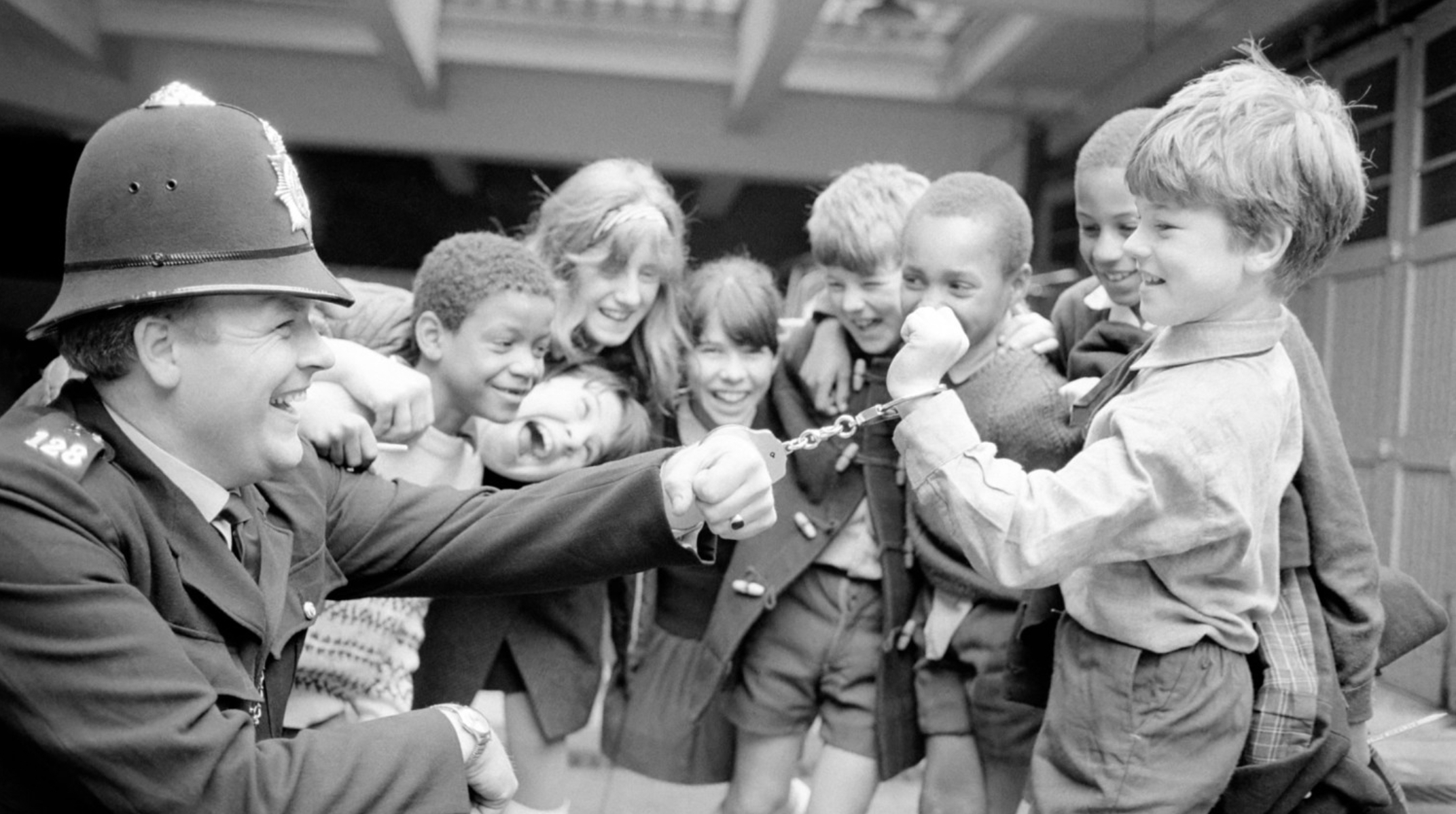
Top photo: The traditional image of bobbies on the beat and police officers rooted in the community, as in Tooting, south London, in 1969
WATFORD/MIRRORPIX/GETTY IMAGES
I have direct experience of three great national institutions that have become broken through carelessness and lack of urgency. Not least the BBC, the world’s best and best-known broadcaster, which clung to a monopolistic licence fee in a digital age and is slowly dying.
Then there’s the NHS, which so recently millions applauded on the streets but which Lord Darzi has officially confirmed is often second-rate and in decline — indeed it has been so chronically underfunded that whatever ministers say about robbing hospitals to find money for prevention is essentially ingenuous. Third, and another institution that helped to cement Britain’s claim to greatness but is now close to collapse: the criminal justice system.
We’ve all woken up to the elephant in the room about prisons and the absurd, almost couldn’t-make-it-up, rationing of sentencing and ad hoc release of inmates. But that’s not the only crisis to have crept up on us. We saw criminal justice at its best in response to the July and August riots, with swift court appearances and palpably deterrent results. But that’s far from the norm. On average it takes almost two years from an offence to completion at crown court, and more than a third of a million cases are in a queue to reach magistrates’ courts. According to the National Audit Office, the ambition to reduce the backlog is “no longer achievable”.
Justice delayed is justice denied. For victims, the slothful process prolongs their travails or becomes divorced from how their lives have moved on. Memories fade, cases atrophy and the shillyshallying squanders any power of deterrence. Despite an assumption that justice “brings closure”, it rarely does.
Public faith in great institutions of state is so great that it tends to linger long after such devotion is misplaced, and perversely we have particular confidence in our justice system for the very reason that it is archaic; but our loyalty means we don’t recognise its faults even when they are glaring.
For example, we like to believe we have open justice but — apart from the theatrical flourish of courtrooms — the process is largely secretive, starting with confidential police inquiries, through mysterious CPS pre-trials and culminating in behind-closed-doors jury deliberations, delivered without justification or insight into how verdicts are arrived at.
Victims in all this are, in essence, bystanders and sentencing is unscientific, largely without actuarial assessment of risk and so without any calibrated way of protecting the public. Indeed sentences themselves are cake and circuses, given that a four-year prison term usually means two, probation often means little or no supervision and three quarters of fines remain unpaid. If ministers worry that the BMA has an undue influence on the NHS, that is nothing compared to the iron grip that lawyers have on their monopolistic and largely hopeless management of criminality.
How best to consider wholesale legal reform is for another day, but it has huge repercussions for policing. Given that for many years my most public role was to help to catch villains and bring them before the courts, it took me a long time to realise that criminal justice, far from safeguarding victims and providing our first line of defence against wrongdoing, is actually tangential to the ebb and flow of crime. Counterintuitive though it seems, neither conviction rates nor tariffs correlate with rates of victimhood.
We are so used to policing as a conveyor belt to lawyers and the courts that it might seem absurd to suggest an alternative approach. Yet detection is the cuckoo in the nest. Detection has hijacked traditional policing. When Sir Robert Peel finally achieved his dream of “modern” policing 200 years ago, it was all about prevention.
And when Charles Rowan and Richard Mayne, the first commissioners of the new Metropolitan Police, set out their famous principle of policing, there was no mention of criminal investigations. Their first rule was “to prevent crime and disorder, as an alternative to their repression by military force and severity of legal punishment”. Their final decree was equally unequivocal: “The test of police efficiency is the absence of crime and disorder.”
Quite why they were so opposed to a detective role is instructive: they feared it would lead to corruption and impel them to look over their shoulder at past crimes rather than preventing tomorrow’s — and they were right. When the first detective branch was established in 1842, criminals were so unused to covering their tracks that there was a string of conspicuous successes. Soon Scotland Yard became a byword for Sherlock Holmes-type brilliance, and a migration from prevention to detection became inevitable.
This seemed reasonable when we measured crime by the number of convictions — essentially a ratio of 1:1. Even when people grasped the absurdity of quantifying crime by detections and turned to counting crime by the number of offences recorded by police, official statistics still hugely flattered the success rate of the prosecution system.
We now realise the police don’t know the half of it. Literally. Since crime, by definition, is illegal, villains don’t report it and nor do most witnesses or even victims. That’s either because they don’t trust the police or believe they won’t be helpful. This is especially so for marginalised groups, including victims of antisocial behaviour and of intimate, sexual or misogynistic abuse, but hospital surveys show that huge numbers of serious and even life-changing injuries to men go under the radar too.
Victims might be embarrassed, have been doing something reckless or illegal, fought with friends or are fearful of enemies… there is a multitude of reasons. Some crimes go undiscovered. Many more, including major frauds, get covered up. The real extent of offending, including all that vast mass of dark crime, can only be triangulated from a variety of sources, rather as physicists calculate the mass of a black hole in space.
And when we do that, notably with large-scale victims’ surveys and hospital admissions data, we realise how depressingly little impact the criminal justice system has. Layers of legal safeguards have made conviction increasingly more difficult, as well as making cases ever more indulgently longwinded (on average 75 per cent longer in a decade). Even on the police’s own statistics, only 5 per cent of offences result in a formal conviction; on broader measures like the Crime Survey for England and Wales, the proportion resulting in a classic punishment like prison will be below 1 per cent.
Imagine you are in charge of a production line on which only 1 per cent (or even 5 per cent) of duds are spotted and dealt with to the expectation of your customers. So, radical as it might seem, we need to look back to the founding fathers and regard detection as the mark of failure, shutting the stable door after the horse has bolted, rather than success.
Most crimes can be cut without much help from courts and lawyers. Burglary and car theft are down almost 80 per cent from their peak through better design and security. And criminal justice does little to resolve the cultural factors behind knife crime and other high-profile cases: dysfunctional and antisocial families, mental illness and broken homes.
This is not to say there is no role for detection. The certainty, and swiftness, of being caught is what keeps most of us from misbehaving and repeat offenders are best kept out of circulation. But the fetish with detection means not just that police are looking backwards, they have withdrawn into just the sort of cloistered posse the founding fathers feared.
Little wonder a poll last year indicated that fewer than 50 per cent of citizens trust even their local police. You can now travel the length and breadth of Britain, including the busy city centres, and never see a uniformed presence, except perhaps double-parked to buy a cup of coffee or sweeping past on blues and twos. Their retreat has been accompanied by the departure of informal guardians, such as park keepers and railway porters, and by such risk aversion that traffic wardens or even security staff in shops or stations or are instructed not to intervene.
The abandonment of patrolling was justified on the grounds that bobbies on the beat rarely led to prosecutions. But that missed the point that prosecutions are not what people really want. It is the absence of crime, the ability to feel at ease in our own communities, that is more important. In fact, the crimes that most of us encounter are the little things such as dog poo and graffiti, speeding cars or cyclists wantonly disobeying traffic rules. (We mostly fear major crime because we read about it or see it on TV.) As the broken windows theory teaches, it is the little anarchies that lead to bigger ones — indeed, the trend in acquisitive crime is usually followed a few years later by corresponding violent crime.
To understand why this happens, we need to appreciate how people get sucked into crime. The dichotomy between you or me and so-called criminals is absurd (a third of all men have a criminal conviction; the rest mostly never got caught). Yes, some people have a predisposition to act badly, a few are sociopathic, but even then it is only one part of the equation.
We underrate the much greater powers of motive and opportunity. Temptation really does make the thief, and different temptations suck in quite different types of people: the teenager at home who gets into computer crime, the one who takes up phone snatching, the one who gets into drugs and turns to panhandling or burglary, the business executive seduced into tax evasion or insider trading. Crime is an infection and we need to look to circumstance and not just think a problem has been solved once we’ve found someone to blame.
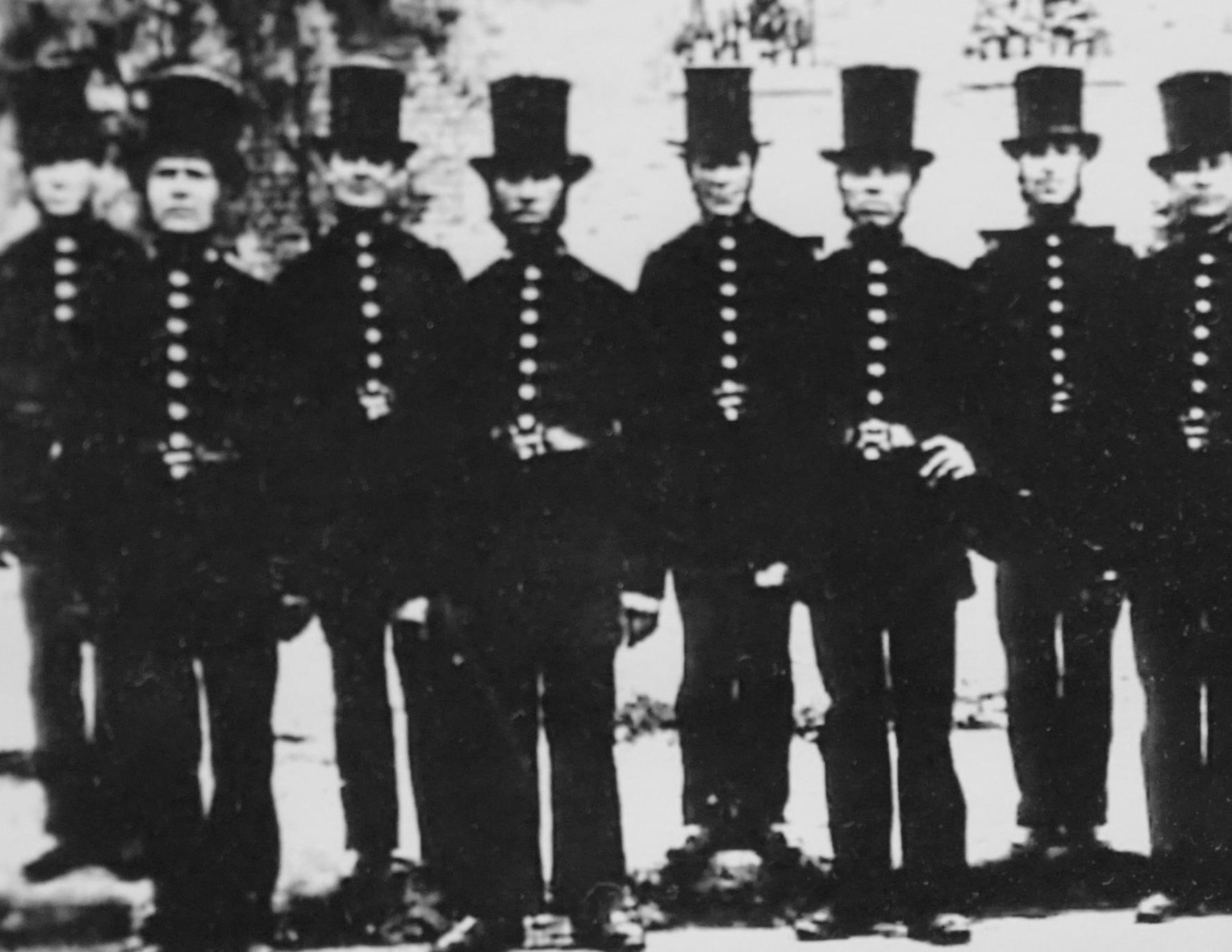
Peeler was the name given to the first police officers, named after Sir Robert Peel who introduced them
ALAMY
We need to reconnect police and public. In the words of Rowan and Mayne, we shoul return and make real “the historic tradition that the police are the public and that the public are the police, the police being only members of the public who are paid to give full-time attention to duties that are incumbent on every citizen in the interests of community welfare and existence”.
Police should do prevention, along with the myriad other important safeguarding functions for which they have responsibility, such as VIP protection and crowd control. In England and Wales they would continue to report to the Home Office. The detection role should be separated out, reporting to the Ministry of Justice. Without that demarcation — Sir Robert Peel was right — the gravitational pull of detection will always dominate.
Detection is important in its own right, indeed too important to be left to the police. Investigatory skills are not unique to sworn officers and (especially now that crime is migrating to white-collar scams) we should look to scientists, engineers, epidemiologists, accident investigators, actuaries, journalists and of course AI to inject a wider range of experience and skills. The investigatory branch should be multidisciplinary and far removed from the canteen culture of a closed shop.
While policing needs a central agency, it could be largely local, while the detectives might be largely national (perhaps trading on the world-famous name of Scotland Yard?) And we need to be honest with victims, acknowledging how profoundly the justice system promises more than it provides. We need 24-hour courts, productivity must be transformed, and while sentences need not be harsher (indeed many serve little purpose) nor should the public be lied to — six months should mean six months.
Seceding detection doesn’t mean disengaging policing from investigations. Uniformed officers are the eyes, ears and back-up for investigators — but they should each have largely different skill sets. Mainstream policing needs to be less paralegal and focus more on making things better. All chief constables know about POP — problem-oriented policing — which aims for a permanent fix, not just an arrest.
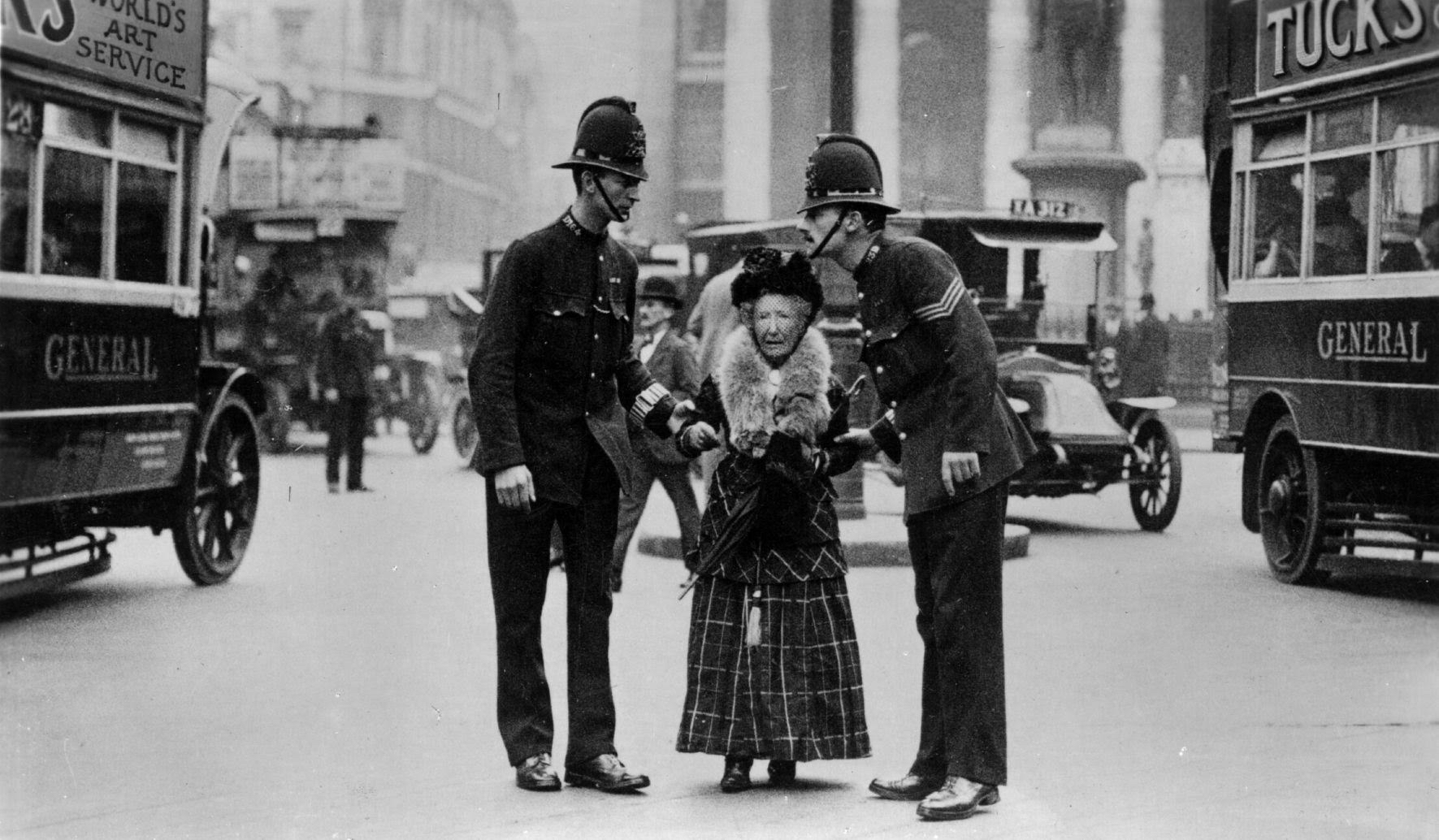
London traffic police escort an elderly lady across a busy street in London
HULTON ARCHIVE/GETTY IMAGES
Problem-solving police examine the chain of events that lead up to crime and seek to break the weakest link. They hold the polluter to account, whether criminal or corporate (or indeed official, for many government policies are criminogenic). They work in the community but also go right to the top of the food chain to make products, services and policies safe from crime. They think about the basics. But with notably successful exceptions like Durham, when run by Mike Barton, they are too often distracted, mostly by detection.
Is this all pie in the sky? Perhaps so. For a start the public finances are in dire shape so there’ll be no extra money. Yet there are many officers, including many senior ones, who get this, including coppers’ coppers who are revered within the service. Last year a Police Foundation inquiry, stuffed with some of the best minds in policing, was far more radical than any thinking that takes place outside policing. The bigger problem is probably the public and hence the politicians.
In particular it may go against the grain for leaders steeped in law, and that includes a vastly disproportionate number of MPs as well as the policing minister, Diana Johnson, and the former prosecutor Sir Keir Starmer. But the failure of other methods, and the crisis of confidence in policing and the courts, might just open minds.
In Labour’s pitch to the electorate, alongside a barrage of uncosted and unevidenced promises (to improve detection, reform the justice system, put the needs of victims first, tackle the prisons crisis and cut reoffending) there was a promise to “take back our streets” — to restore neighbourhood policing, place a greater focus on prevention, and even to hold “personally to account” companies and others whose services and products were precursors to crime.
They sort of get it. Do they have the courage to do it?
Nick Ross is visiting professor of crime science at UCL and presented the BBC’s Crimewatch for 23 years